MMAP · Progress Reports
A report that reads like the child, not a report card.
Bring dated classroom evidence and the guide’s understanding of the child into one report. Review the source records, write the narrative, preview the family version, then save a draft.
How it comes together
From documented work to a reviewed report.
Captured across the term
Choose a child and reporting dates. Review the available lesson evidence and observations. Where documentation is missing, keep the gap visible and use your professional judgment.
Reviewed by the guide
Review evidence across curriculum areas and add the narrative your family conversation needs. School and community templates help reuse a layout while preserving the child’s individual context.
Previewed before sharing
Inspect the family preview, save the draft and reopen it to confirm your writing. Sharing with families remains a separate step, after your school’s review.
The records support the prepared adult: observation, context and educational judgment stay with the guide. A saved draft gives that work a place to develop before it is shared.
Current sample reports
See a full report.
These Upper Elementary and Adolescent (Erdkinder) samples were generated in September 2026 using the current MMAP narrative report layout. All names and learning details are fictional. Each sample shows both pages, with the complete PDF available to download.
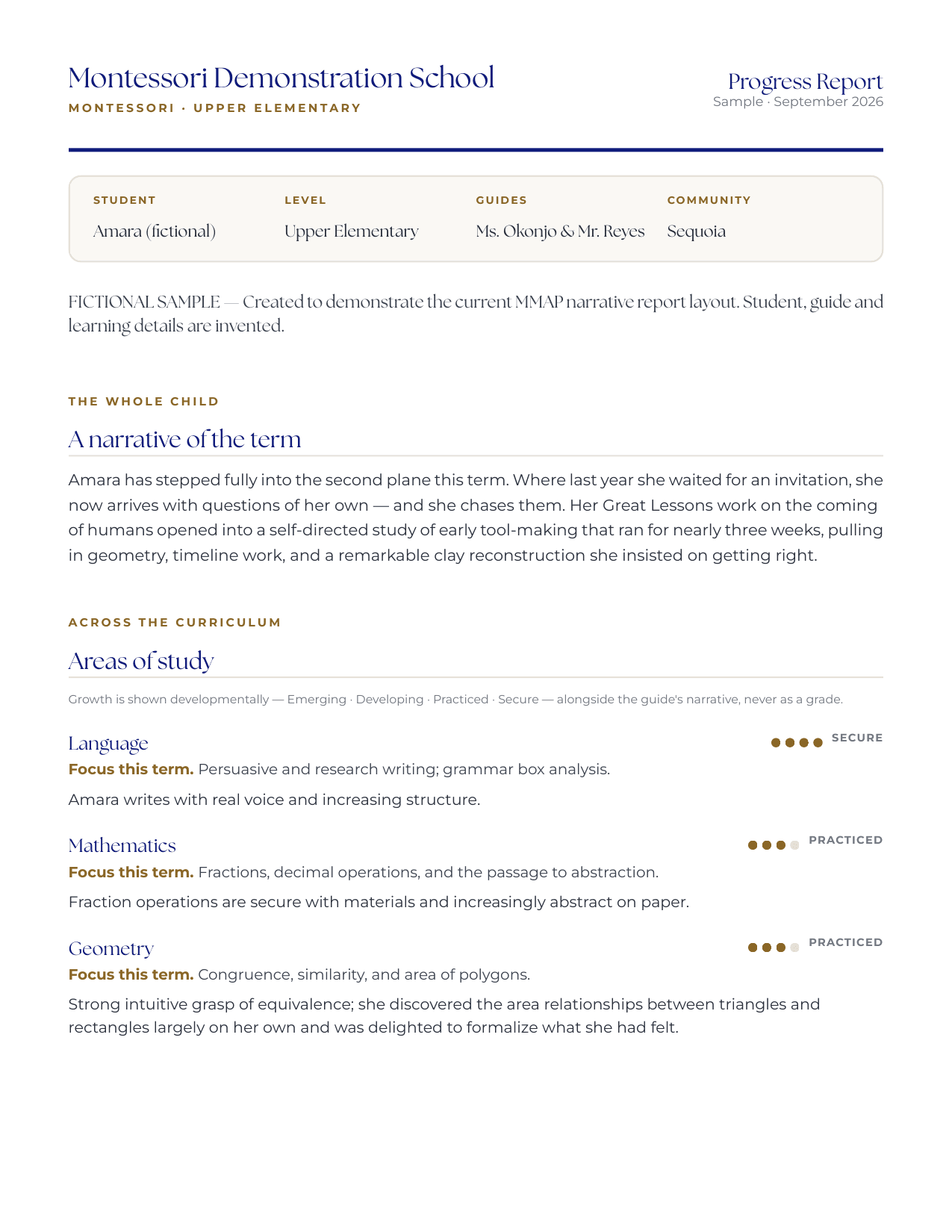
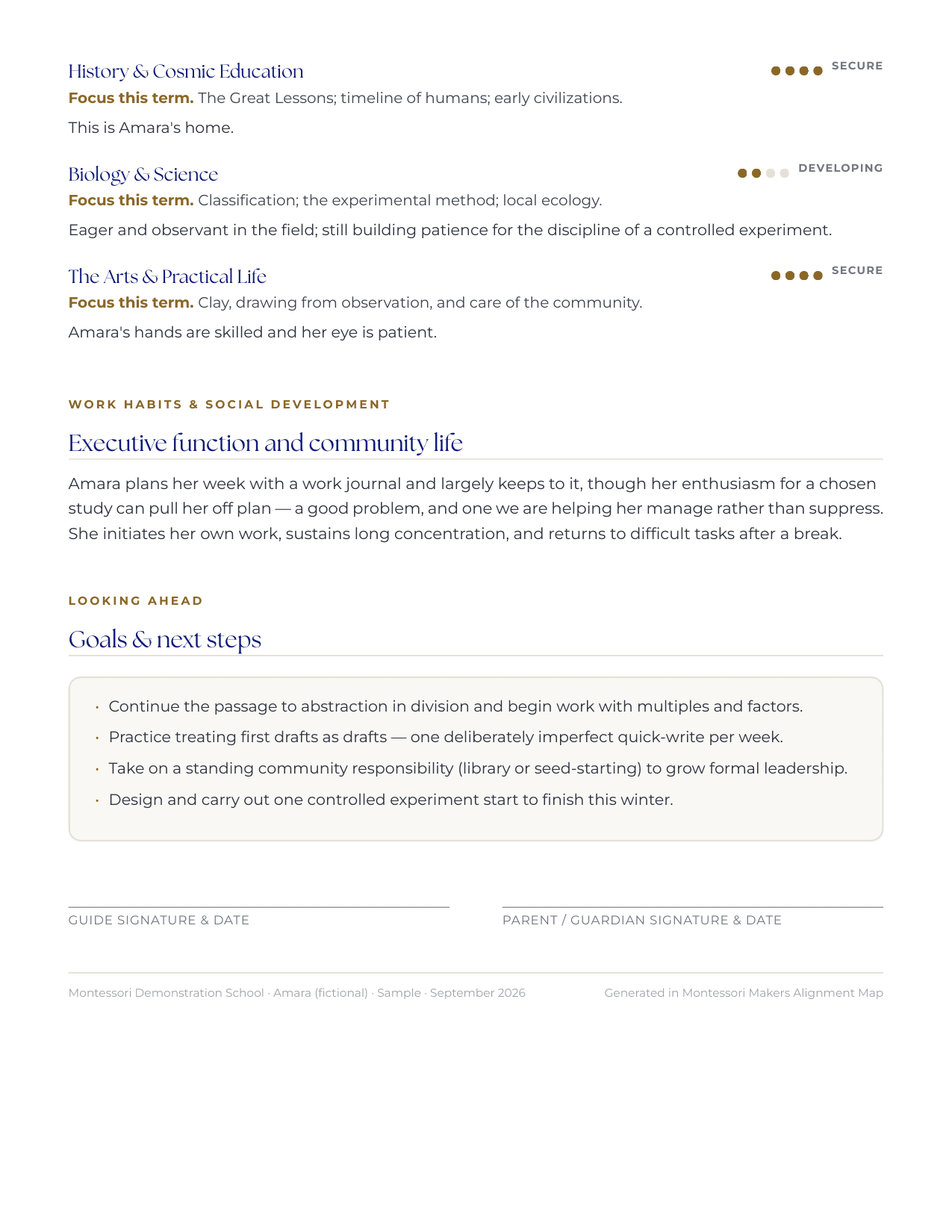
September 2026 sample using the current MMAP report layout. All student, guide and learning details are fictional.